How and why Deni Kay turned his whisky passion into a (not very profitable) business
What does the man behind the three oldest spirits ever bottled for Aus have to say about aged whisky? We decided to find out
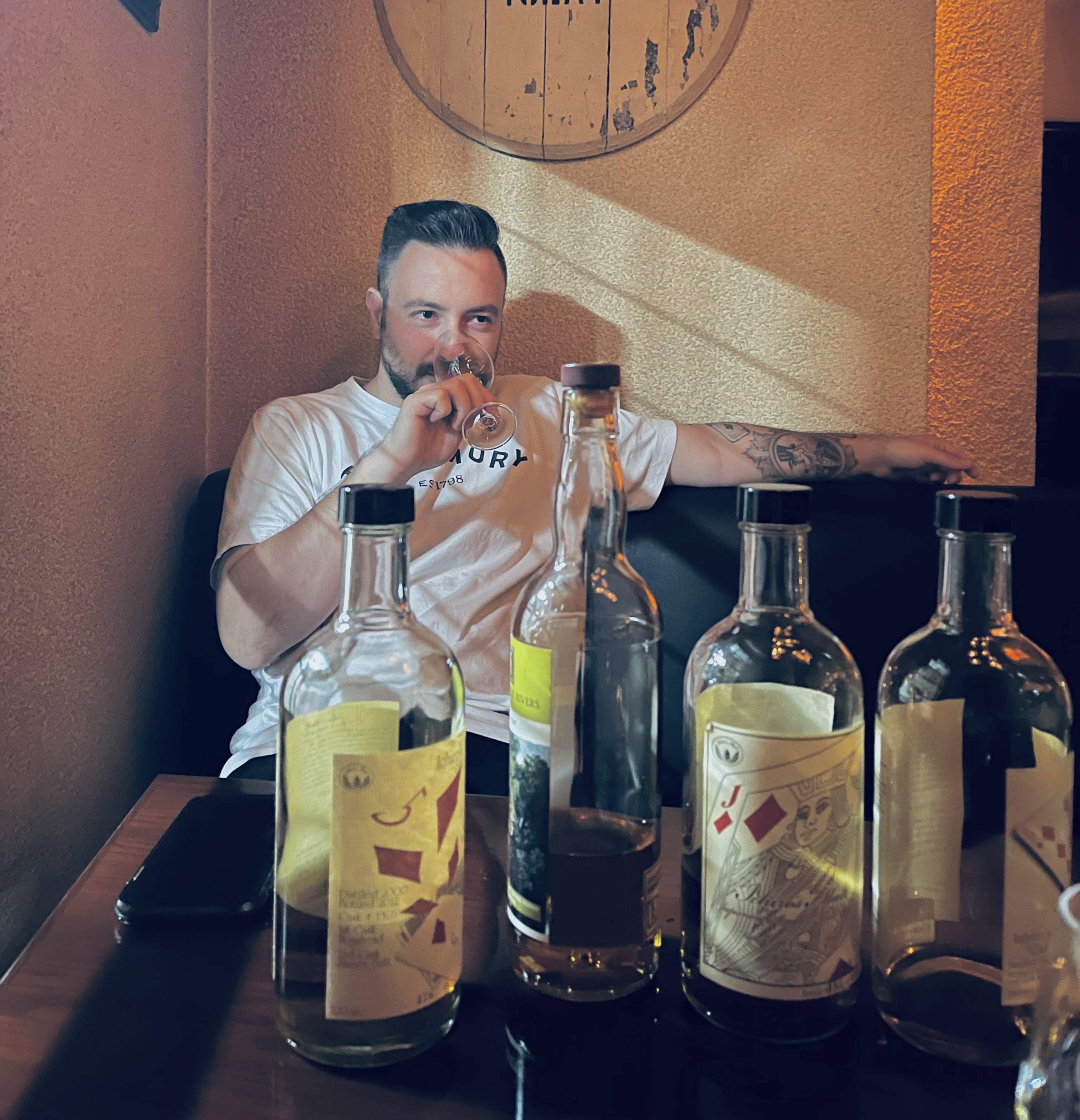
Deni Kay certainly loves whisky more than most. In fact, he lives and breathes it; so much so that he, alongside close mate David Vuu, has been importing and bottling only products he loves for five years… all without earning a cent.
As he puts it, “it has always been a passion project – our wives probably still wonder when they'll see dollar one … Old Master Spirits is not, and has never been, something that pays my bills or David's bills.”
The reason for Old Master’s questionable finance book, in spite of selling out of most releases very soon after launch, is fairly simple: the prices are set at what they would be willing to pay. Refreshingly (and perhaps just a touch naively), Deni and David aren’t in it for the money – they are in it for the love of spirits and the thrill of the hunt.
This makes Deni an awesome person to drink and talk whisky with. He has, after all, sampled more 50+ year old casks in real life than most whisky-folk have in their dreams.
When asked what he loves most about old and rare whisky, Deni Kay says three things: “the journey, the experience and the friendships formed.”
He then went on to say a lot more: “With rare whiskies only a finite amount of certain older bottles remain, so the experience of finding and drinking them is what I love. Comparing profiles with other old whiskies, and contemporary whiskies, is part of the journey and education. Many of them come from a closed or demolished distillery, drinking such whisky is always special. I've made many life long friends through whisky hunting and drinking.
Through his work at Old Master Spirits, Deni has become one of the leading voices on ultra-aged spirits. This goes beyond whisky itself; after all, he, Vuu and Old Masters lay claim to the first, second and third oldest spirits independently bottled for Australia, all of which were cognacs.
It is therefore worth paying attention when he explains the differences between ultra-aged expressions of each: “If we talk about whisky, the expectation is, if it's going to spend more time in oak, that you're going to have more oak tannins … With cognac and armagnac – with brandy – that's not necessarily the case.”
The reason? Because “the wood management is very, very different; the size of casks can be very different, and then, also, some of it will go into glass, so the oak influence stops.”
But more than tasty spirits, what Deni Kay loves the most are the stories behind every year that has led to every sip. As he shares with me a sample from one of his recent releases – a 100 year old cognac sold at a very smart $1.4k per bottle – his eyes light up as he rushes to show me an image on his phone that, in his mind, is almost as important as the liquid itself.

That image was of the long-since decommissioned, direct-fire still used by Famille Cabanne back in the 1920s; a piece of distilling history that is still putting premium cognac on the shelf a full century on.

“The story for us is so important,” says Kay. “In terms of provenance, we need to know where it was distilled, the still that was used, who put the barrel together, how old it was before it went in there, who looked after it … That's part of what makes it special to me.”
This naturally leads into another interesting can of worms, and one Deni delights in discussing: whether the quality of whisky has improved over the past 100 years.
His short answer: yes and no.
His answer with a longer finish: “quality has improved in all aspects of producing alcohol; wine producers, whisk(e)y producers, brandy producers have all improved. Science helps you with a lot, and you have increased pressures to provide a better quality – that just that competition that's out there that's pushing everyone to do better. “There is a lot of nostalgic romance when it comes to spirits that were produced in the past, and there's something certainly special about the spirits of yesteryear and the feeling it gives you and the experience that you get, but I still think that everything that we do now was better than what it was last year or 10 years ago.”
Finally, we asked Deni Kay whether he has any advice for Whisky Magazine readers looking to dabble a little deeper into the extensive, albeit often-complex and difficult to navigate, historical liquid archives available in 2026:
“The easiest and most cost-effective way to explore old whisky is to go to bars,” he says. “We are fortunate that every state in Australia has great specialty bars, and festivals, with top tier whiskies available to try. Buy older bottles from auctions or other collectors, perhaps together with friends so you can share the outlay and the experience. Drinking different whiskies and discussing them with others is the best way to expand your palate, experience and knowledge. If all that fails start your own whisky appreciation club with other local whisky geeks.”
We would also add keeping an eye on Old Master Spirits’ upcoming releases on its website here.