Mel Hack: From the Back Bar to the Still
From Melbourne’s whisky bars to Canadian distilleries, Mel Hack shares the experiences shaping her approach to flavour, production and making whisky more welcoming.
"It’s not an easy gig. As romantic as it can seem, sniffing and tasting whiskies all day, you’ve got to have some grit"
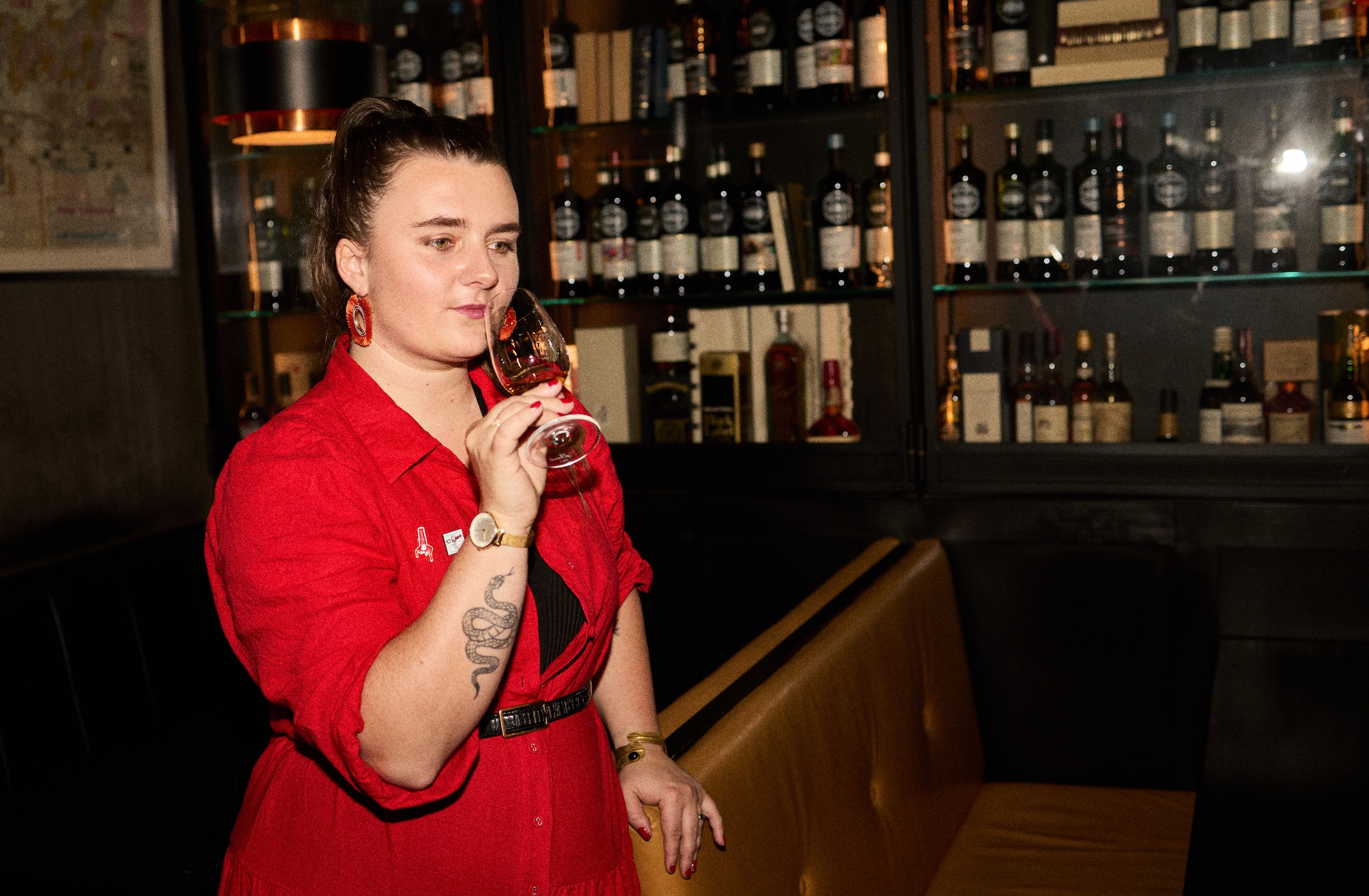
For Mel Hack, understanding whisky starts with curiosity and a conversation. From building bespoke flights at Melbourne’s Whisky & Alement to working in production and education on Vancouver Island, her career has taken her from finding the right dram for a guest to exploring the small details that shape its flavour. Now back in Australia and studying distilling, Mel talks tasting in colour, the Canadian whiskies that deserve more attention, and why making people feel welcome matters just as much as what’s in their glass.
You came up through Melbourne’s hospitality scene before landing at Whisky & Alement. What was the moment you realised whisky was going to be more than just another spirit on the back bar?
I tend to look back on two key moments. The first was at a Nikka whisky training session while I was working at The Espy in St Kilda back in 2019. I remember just falling head over heels for the entire spirits portfolio that day. The second was while working at Beneath Driver Lane, a whisky, blues and cocktail bar. Our head of whisky, Ankit, was so passionate and loved to share stories and anecdotes about each bottle. It made me realise that a spirit can have just as much of a story as a cocktail, if not more. Whisky & Alement pioneered the dealer’s-choice flight in Australia.
Can you walk us through how that actually works on a busy night, and what it taught you about reading people as much as reading whisky?
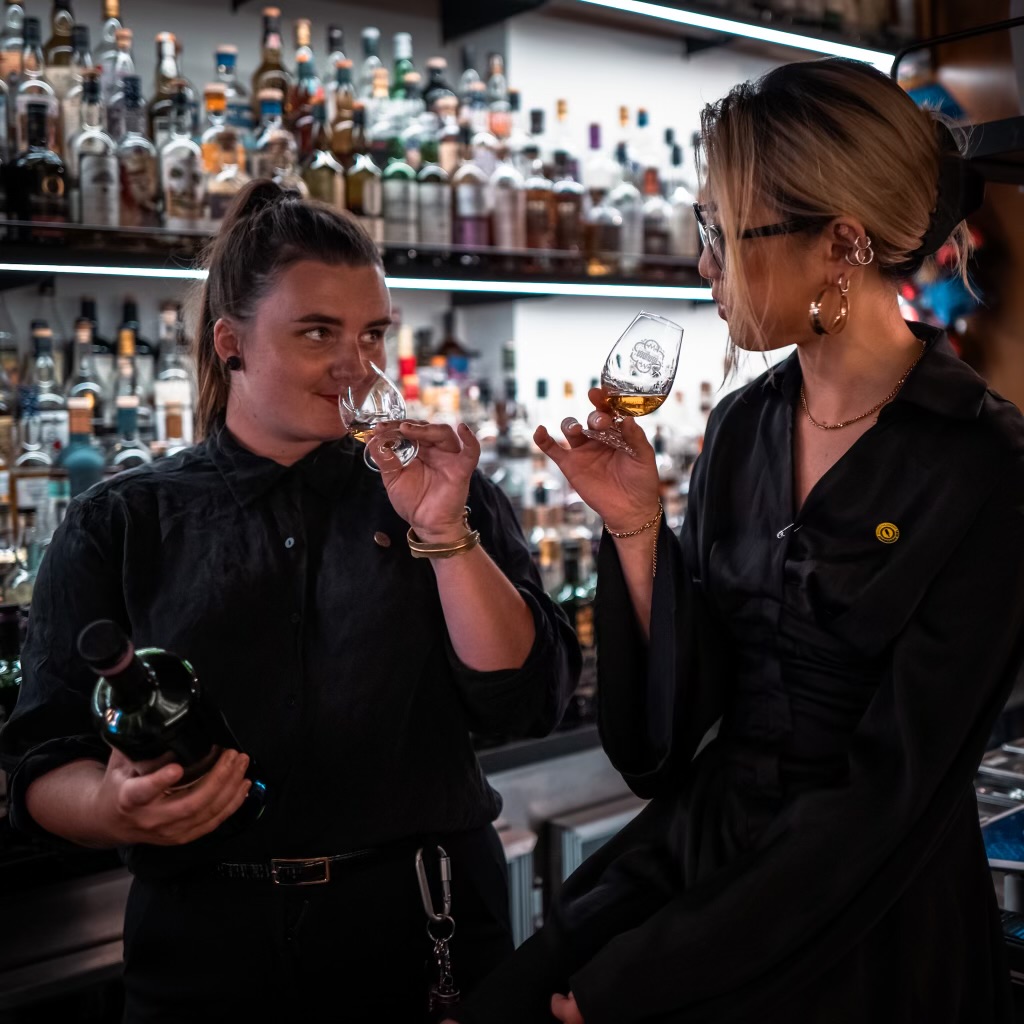
In my time there, the goal was always to make the experience as approachable as possible for guests, no matter their whisky knowledge. We’d ask things like, “Do you want a flavour journey, or would you like to try a specific region, country or style?” and “Do you want fruity, sweet, savoury, weird, smoky or oaky?” If someone didn’t know, that was okay too. We’d then ask questions like, “What’s your favourite dessert, cocktail or wine?” This would give us a better sense of their palate, and then it would be up to us to hunt down those bottles from the selection of more than 700 whiskies. It taught me there are typically three kinds of drinkers who order a dealer’s-choice flight. Once you understand that, it becomes easier to create flights on the fly:
The whisky enthusiast: They’ll be hyper-specific about what they like or don’t like and will show you photos of their entire whisky collection at home. This kind of guest can be either the easiest or the most challenging. They’ll either be super excited to try anything, or they’ve already tried everything that interests them. Finding a bottle they haven’t had can be like searching for lost jewellery in the sand. Needless to say, it’s always fun!
The first-time caller: Someone who has never tasted whisky in their life and has been recommended W&A because we’re known for finding great matches for first-timers.
The hands-off guest: The one who wants to impress their pals but doesn’t know what they like, orders six flights and just says, “Surprise me.” Those people will typically still have a good time and enjoy their drams, but my inner critic would struggle a little, selfishly. We got great satisfaction from customising those flights to each group, so at that point, it’s really just a hit to your own ego that you have to suck up.
How did working at Bakery Hill Distillery change the way you think about Australian whisky compared with the bottles you were pouring at the bar?
It taught me that you really, truly have to LOVE making whisky in Australia to pursue it as a business or career. It’s not an easy gig. As romantic as it can seem, sniffing and tasting whiskies all day, you’ve got to have some grit. There are OH&S requirements, constant advocacy, labels warping in the summer heat, council limitations and, biggest of all, taxation.
Sensory approach and flavour
You’ve talked about tasting hundreds of whiskies in a relatively short stretch at Whisky & Alement. How has that volume of tasting changed the way you describe flavour, both to guests and in your own head?
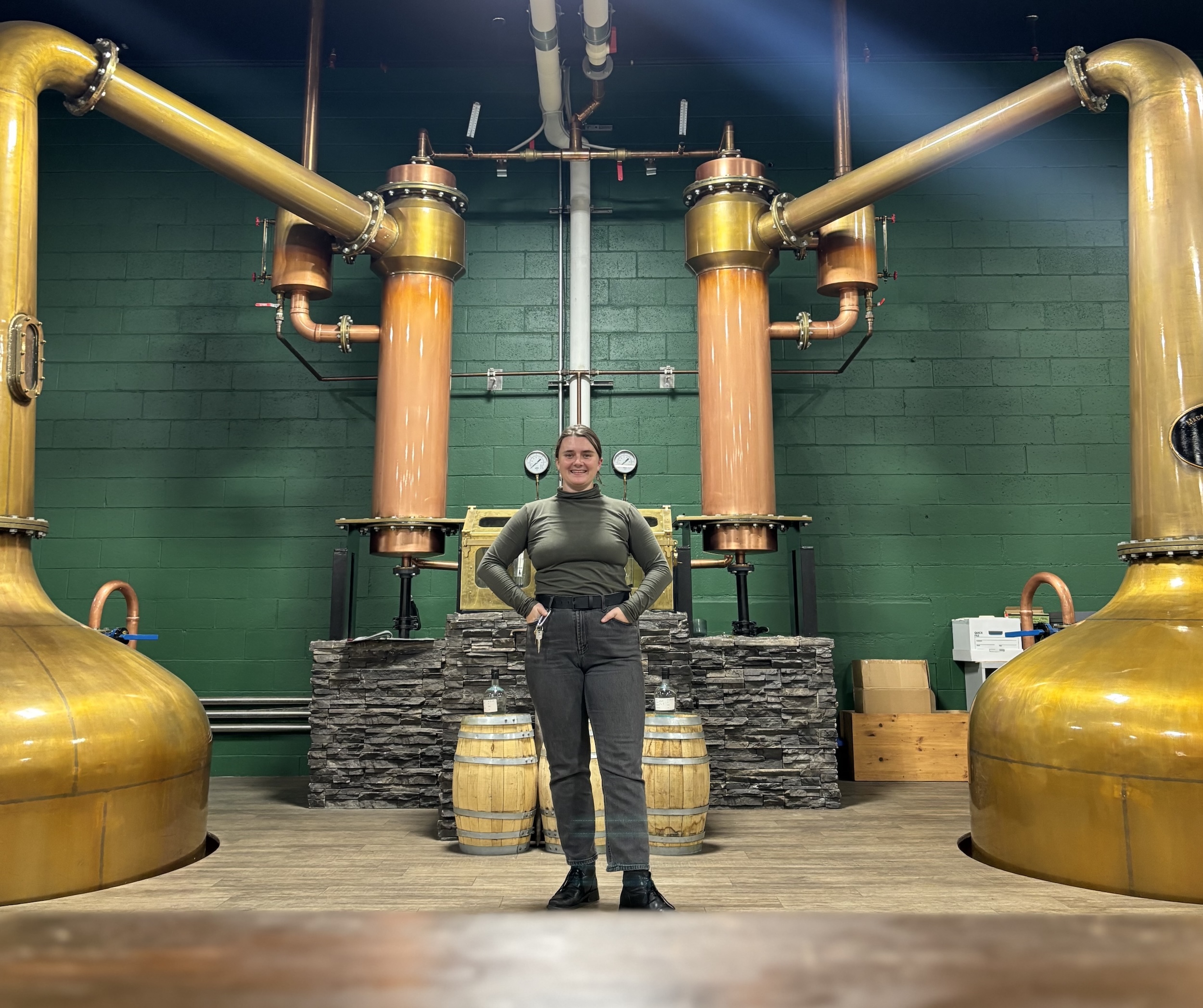
It’s definitely changed things. I worked there for two years and had probably tasted 2,000 whiskies by the end. The way I describe whisky became more emotional, colourful - literally- and conversational. Texture became a bigger part of it too, particularly when I was sitting at a table with the head of whisky for Australia’s International Whisky Awards and several other Australian whisky experts. My vocabulary expanded massively just by being in the same room. When communicating flavour to guests, it made me more flexible in responding to their needs, whether they wanted a basic overview of tasting notes or something detailed and specific. I also noticed that I tended to describe whiskies through colour or sound, which led me to realise I have synaesthesia.
You moved through sherry bombs, peat and then into brighter, more playful profiles. Do you still go through phases, or has your palate settled into something more consistent?
No settling for me! I recently went to Japan, so that’s influenced my current drinking habits. I’m loving smashable highballs with grain or column-distilled whiskies. I had a Toki highball with my dad the other night, and that went down very well in the Melbourne heat.
When you’re building a flight or a whisky cocktail, do you start with the guest’s story, the whisky itself or a specific flavour idea you’re chasing?
When building a flight, it’s always about starting with the guest and their experience with whisky. Then I find out which flavours they either enjoy or want to experience. For a cocktail, it’s a similar process. If it’s a dealer’s-choice cocktail, I’d ask what style of whisky they’d like, then what flavour profile. There’s a bit more versatility with cocktails because if someone says, “I want a cocktail that tastes like peaches and cream,” you might actually have those ingredients. When it comes to whisky, there’s a bit more hunting through the back bar to find that specific flavour.
Writing and the wider industry
You’ve written for SMWS Australia, Australian Bartender magazine and Whisky Magazine UK. How does writing about whisky feel different from talking about it across the bar?
I thoroughly enjoy the research aspect of writing about whisky. Typically, you’ll only see me publish an article a couple of times a year because I work on them for a long time. Each one is usually inspired by an unanswered question. An example is the article I wrote exploring why rye can taste like pickles. It started with a question at a whisky tasting, and nobody had a straight answer. I did some research and still couldn’t find sufficient evidence, so I reached out to experts in the field. That turned into a two-part article published in print by Australian Bartender magazine, then online a year later, after I’d found more evidence from more experts. Writing about whisky allows me to take my time, whereas talking about it over the bar means you need to be quick on your feet with the facts and figures.
What story or piece have you written that you’re still most proud of, and why?
Not to be biased, but I believe being published by Whisky Magazine UK is any whisky writer’s Oscar moment. Aside from the calibre of Whisky Magazine as the most trusted whisky media source, I was proud to have shone a light on Canadian whisky, with my article 'A History of Canada: Innovators, Bootleggers, and their quiet craft revival'. At the time, I’d just moved to the country and was researching and trying to learn more about its history. I had a really hard time doing it. There just wasn’t much out there aside from a handful of books by the same authors and a few online articles. I then started putting the puzzle pieces together, realising how innovative Canadian whisky has been on the world stage. I was so excited to share what I’d found, and being able to shine a spotlight on some smaller craft producers I adored was lovely too.
Australian whisky has grown dramatically in the time you’ve been in the industry. What do you think the local scene still under-communicates about itself?
In the time I’ve been in the industry, I think we’ve done a pretty good job of communicating how climate affects our maturation and how our high taxes contribute to pricing. But something we could do better is whisky tourism. It’s improved in recent years, with the likes of Vic Distilled promoting Victorian distilleries, but we’re still very much known internationally as a wine-focused country. Even Australian guests at W&A would be surprised on a daily basis to learn that we make whisky here!
The move to Canada
After Melbourne’s whisky-bar scene, you moved into production and education roles at Shelter Point and Macaloney’s on Vancouver Island. What was the biggest shift in how you think about whisky when you started working on the production side?
Much like a cocktail, the smallest details can make the biggest changes to the end product. I remember sampling a batch of whisky before bottling at one of the distilleries I worked at, I won’t name where and it didn’t taste quite right for a core-range product. I was a bit stressed and thought the blend hadn’t been done correctly, so I passed it to the head of production, who agreed it wasn’t right. They simply got a wooden paddle, gave the 5,000-litre batch a really good mix for a minute or so, and we sampled it again. It was perfect. It turned out the batch had been sitting too long since blending, so the fats and oils had separated slightly and just needed to be mixed back together. That was a really simple but cool teaching moment.
Macaloney’s has had strong success with peated single malts and other distinctive expressions. How does the Canadian approach to peat and maturation compare with what you saw in Australia?
It’s interesting because I found the approaches to be similar to those in Tasmania. For example, Graeme Macaloney peated the barley on site at Macaloney’s, but it wasn’t peated traditionally. They would bring in malted barley, soak it in water to rehydrate it, then put it into the peat smoker with whatever peat they had available - usually Islay or Washington peat, although they have a whisky made using 100 per cent Vancouver Island peat coming out soon! This isn’t too dissimilar to the way Lark in Tasmania peats its barley using locally sourced peat. The only difference was in the shape and size of the peat smoker itself.
Elsewhere in Canada, many distilleries import peated malt from the UK. Shelter Point experiments with a variety of smoking methods in its Smoke Point range. Rather than using peated malt, they’ll use ex-peated casks, smoke barrels with woodchips or burn driftwood inside barrels. This was due to the lack of available peat in their area and a desire to create something more authentic to the environment where they make their whisky. Maturation on Vancouver Island, where Macaloney’s is based, is very similar to that at distilleries in and around Melbourne or in Tasmania.
You’ll find whiskies matured for an average of five to seven years, with outliers of 10 to 15 years. As these distilleries get older and build up more stock, time will tell whether they consistently make whisky in that five-to-seven-year range or release older expressions. Elsewhere in Canada, you’ll find much older whiskies, owing to the colder climate and longer-established distilleries.
Do you still feel connected to the Australian whisky community from the other side of the Pacific, or does the distance change the relationship?
I’ve just moved back home to Australia, but while I was in Canada, I still felt very connected to the Australian community. We have a Facebook group chat with whisky alumni that’s very active and tight-knit. Service, cocktails and culture You’ve been recognised in Australian bartender rankings and competed internationally.
What do you think the whisky category still gets wrong about how it presents itself in bars?
In terms of back-bar presentation, a small but important detail that brands can neglect is the positioning of the labels on their bottles. A beautiful label in the centre or on the bottom half of your bottle may look great when it’s standing beside your other bottles at the distillery. But when it’s sitting among hundreds of bottles across multiple tiers, that label is likely to get lost in the wash.
On another note, the whisky category can assume knowledge and forget the clientele it’s talking to. I remember the first time I did a bottle-shop tasting in Canada, not a single person cared what the barrel type was. They just cared about the flavours and price range.
The same principle applies in bars. If you’re speaking to someone who’s new to whisky or simply enjoys it without nerding out, don’t bombard them with information. It can be overwhelming, and it really doesn’t need to be that deep for everyone. Inclusion and diversity have been part of how you’ve been known in the industry.
What practical changes have you seen or not seen in whisky bars and distilleries in the last few years?
I get asked, “Do you even like whisky?” less often, so that’s nice. I think that could be attributed to my own confidence in how I talk about whisky now, but it’s also linked to visibility within the space. We’re seeing more women and non-binary people represented in whisky, alongside high-profile partnerships such as Sabrina Carpenter with Johnnie Walker and Beyoncé with her brand, SirDavis.
Every bit helps. Unfortunately, I still see sexism within the production space. I’ve been asked, “Can you even physically do that?” because of my height and perceived strength. Thankfully, there are more and more whisky communities for women across North America, the UK and Australia that I’ve become part of. I can turn to them, and we always have each other’s backs.
When you’re guest-shifting or running a tasting back in Melbourne, what do people most often want to know about the Canadian whiskies you’re pouring?
While I was representing Macaloney’s, people were very curious about the peated whiskies, loved the Irish-style, triple-distilled pot still whiskies and wanted to know how to get more! Unfortunately, there are currently no importers for Macaloney’s in Australia, but never say never! The last I heard, The Elysian and Whisky & Alement both stocked a bottle or two, but supplies were limited because the bottles had been brought over by hand.
Looking ahead What Australian whisky or producer has surprised you most in the last couple of years? Archie Rose announcing Chris Hemsworth as a co-owner was a big, exciting move for the entire category. He’s the biggest name to have raised a glass to Australian whisky, and I feel it’s a massive move in the right direction.
If you were designing a dealer’s-choice flight that told the story of where Australian whisky is right now, what four styles or producers would you choose?
There are usually four whiskies on a flight paddle, so I’d go with Kinglake for its Outback Single Malt, Archie Rose for its experimental malts and rye, The Gospel for its rye and experimental casks, and Sullivans Cove for its internationally beloved mature single malts. Starward also gets an honorary mention for its grain whisky and red-wine-matured single malt.
What’s the next thing you want to learn or explore in whisky, whether that’s a production technique, a region or a way of talking about the spirit?
I’m currently studying for my general certificate in distilling, so that’s my focus right now. I’m excited to be starting work this December at a distillery in Apollo Bay that’s really passionate and keen to explore some innovative Australian products.