Meet: Matt Bailey
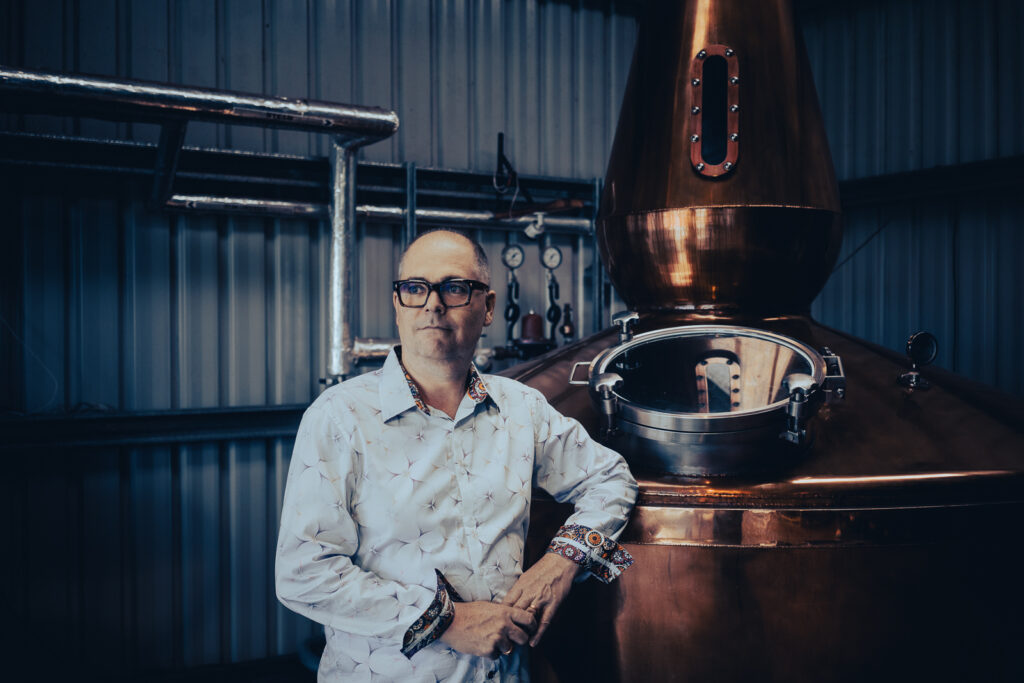
Matt Bailey has been appointed to lead the European operations of the Scotch Malt Whisky Society, marking a move from Sydney to the global home of whisky.
"“I’d rather be on the bottom rung of a ladder I’m interested in climbing than mid-way up one that I wasn’t.”"
If whisky mecca is where the heart is, Matt Bailey has just been handed a slice of paradise. Most recently running the Australian branch of the world’s biggest whisky club, the trumpet-playing whisky expert from Sydney has been seconded to the home of whisky, tasked with leading the European operations of the Scotch Malt Whisky Society. The role sees him relocate to Edinburgh, based at the Society’s home in Leith.
Ash Pini: Let’s start at the beginning, how and when did you join the Scotch Malt Whisky Society (SMWS)?
Matt Bailey: It was 2015 and I was actually running my own business called Wunder and Whisky, doing private and corporate tastings, predominantly in Sydney and a bit in Melbourne. It was boardrooms, private homes, restaurants, just about anywhere someone said, “let’s do a whisky tasting” or “let’s do a whisky dinner”. At the time, I was a Society member, so I occasionally used SMWS whiskies in my line-ups. I also did some work for Alba Group, the importers of Benromach and Kilchoman, and I had done some work with LVMH. You could say I bounced around a couple of whisky companies, but to be fair, I got my start in the whisky trade through Vintage Cellars.
AP: How did you come to join Vintage Cellars?
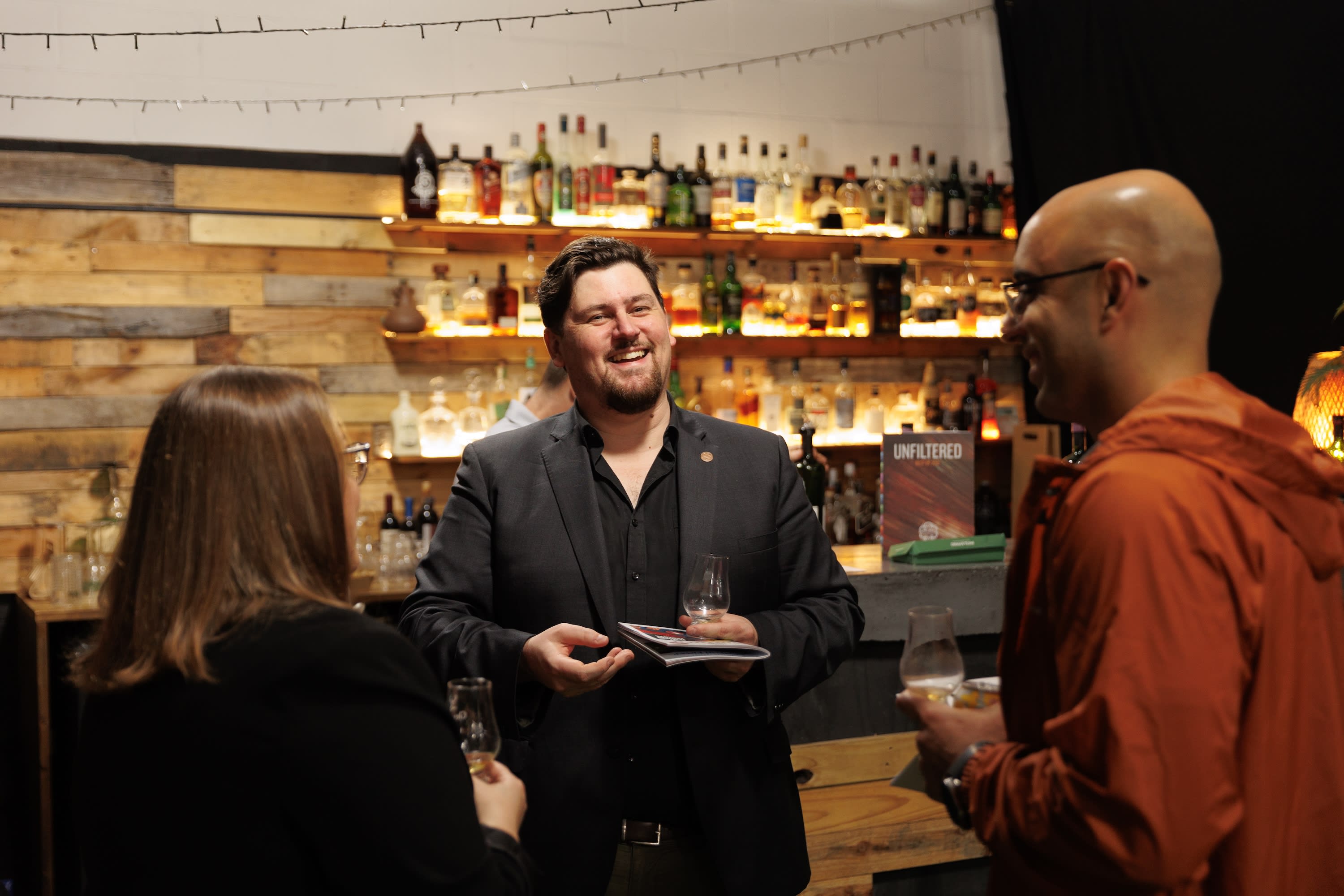
MB: I was working in a completely different industry and our office was above the store on Carrington Street in Sydney, around 2009. I’d spend my lunch breaks in the bottle shop chatting with the guys about spirits, whisky, bourbon and rye. They loved it because they were all wine guys but were leaning into spirits. Then the manager offered me a job for exactly half the pay I was getting upstairs. I immediately said, “yeah, I’ll do it”. I went upstairs and quit. I had that moment where I realised I’d rather be on the bottom rung of a ladder I’m interested in climbing than halfway up one I wasn’t. I worked four or five days a week in the shop and it was a lot of fun, talking to customers and being right in the middle of the city. It was a high-volume store. At the same time, I was hosting my own event, Cleveland Street Whisky Nights, once a month. I had a suspicion there was a mole at one of my tastings, there to see how I hosted. There were these guys at the back who looked a bit too professional. Shortly after, I got an email from Andrew Derbidge saying, “hey mate, we’re looking for an ambassador to join the Australian team”. And I ignored the email. I thought it was a big job, well beyond me. I don’t know why I thought that at the time, but I did. Luckily, he emailed again two weeks later saying, “mate, this is something I was hoping you would reply to”. So I did, and the rest is history.
AP: And was the role everything you hoped it would be, or just as daunting as you feared?
MB: When I first saw the job description, I found out they’d been through two or three ambassadors who hadn’t passed probation. So I rewrote the role and said, here’s what I would do, here’s how I would shape it. Since then, that’s what I’ve been doing. I’ve shaped the club into something much bigger than it was nine years ago. We’ve built an amazing community of members who want to engage with great whisky and great people. I’ve now been with the Australian branch for nine years, with the last three as branch director. Over that time, we’ve grown the branch and member engagement, and things are set up well. It’s now about what’s next. I looked at a marketing role in the US, which involved moving to New York, but it didn’t feel like the right move. Last year, SMWS appointed a new CEO, Andrew Dane, who is based in Edinburgh. He identified the need for someone to lead Europe, and I was approached to take on the role as Managing Director, SMWS Europe. That means overseeing the UK venues, e-commerce, and the development of membership across Germany, France and Denmark. We have two venues in Edinburgh, one in Leith and one on Queen Street in the city. Leith is our spiritual home, that’s where it all began.
AP: How excited are you to move to the home of whisky?
MB: Initially I’ll be based in Leith. I’m incredibly excited. I was saying last night I’m 80% excited and 20% terrified. I think that’s the right balance. AP: How many members do you have in Europe? MB: We currently have over 40,000 members worldwide, including major markets like the UK. Europe is a significant market alongside the USA, China, Japan and Australia. When someone becomes a member, they join a global whisky club. They get access to all our venues, bottlings, events and experiences, dinners and tours. The bottlings are very special, always cask strength, single cask whiskies from one of the widest ranges of distilleries in the world. We’re constantly growing, with new distilleries joining all the time. We bottle single malts, ryes, bourbons, and even Cognac and Armagnac. What’s fascinating is how unique each cask can be. You can take two casks from the same distillery, distilled on the same day, aged in the same type of cask, sitting side by side in the same warehouse for 15 years, and they can taste completely different. That’s one of the most exciting aspects of the job. As an ambassador, you never talk about the same whisky twice.

AP: How did the Society’s relationship with other spirits evolve?
MB: When we were founded in 1983, we only bottled Scotch whisky because that was the opportunity Pip Hills, our founder, identified. At the time, blended whisky dominated and single malts were not common, so focusing on single casks was visionary. Pip would go into warehouses and pick casks that were destined for blending and offer to buy them and bottle them at cask strength. People thought it wouldn’t work. After about 10 years of selecting the best casks from across Scotland, the Society had built up its own warehouse with around 60,000 casks.

AP: When did the Society begin working with other categories?
MB: About seven years after founding, around 1990 or 1991, we bottled our first Irish whisky, a couple of casks from Bushmills. There was nearly a revolt among members. People were asking how we could bottle Irish whisky at the Scotch Malt Whisky Society. A similar reaction came in 1996 when we bottled our first Japanese whisky. Letters came into the editor of Unfiltered magazine questioning it. One comment was along the lines of, “what’s next? Women’s dresses in Harrods? BMWs made outside Bavaria?” Of course, both are true today. In 2018 or 2019, we bottled our first Australian whisky, three casks to start with, one from Archie Rose and two from Starward. They were fantastic to work with.
AP: How do you view single cask whisky as a product?
MB: Single cask whisky is a bit like listening to vinyl. Streaming is convenient, but it’s not the same experience. A record has warmth, depth and character. It’s similar with whisky. You can buy something standardised, or you can have something truly unique. It’s like the difference between fast food and dining at Firedoor. Both have their place, but the experience is very different.
AP: When you did the Australian bottlings, were they available globally?
MB: All but one case of each were Australian-only releases. The two Starward casks yielded around 270 and 220 bottles and sold out within an hour. The Archie Rose cask was smaller, around 100 litres, so we got roughly 130 bottles. The first bottling from every distillery goes into the ‘dot one’ archive in Scotland. The vaults were renovated last year at a cost of around half a million pounds and they look incredible.
AP: With such a large inventory maturing, what’s the advantage for members?
MB: Firstly, experience. We’ve been doing this for 40 years and understand maturation. Secondly, economics. We buy spirit young, at zero to three years old, rather than paying for aged stock. Thirdly, control. We manage the maturation from start to finish. It’s our story from the moment the cask is filled. In Australia alone, we release between 15 and 22 single casks each month, almost one every weekday. Most sell out within hours, some within minutes. Occasionally a release might take longer, but that’s more about style preference than quality.
AP: What’s the typical price point?
MB: Most bottlings sit between $160 and $220. We’ve worked hard to keep pricing accessible and competitive. At the top end, our Vaults Collection can range from $1,200 to $6,000. These include older bottlings, like 33-year-old casks, which are rare and exceptional.